Garmin Fenix 9 vs Fenix 8: what changes and who should switch
Garmin announced the Fenix 9 and Fenix 9 Pro on 25 August 2026, and the launch coverage made them sound like one new watch. In fact there are 13 main versions, in cases from 43 to 51 mm, with an AMOLED screen or a solar lens, and with satellite and LTE on selected Pro models. So the useful question is whether any of them changes your choice, or whether the Fenix 8 already does the job.
For many buyers, the Fenix 8 is enough, and three facts explain why. The base Fenix 9 in 51 mm is rated for up to 29 days as a smartwatch, the same as the 51 mm Fenix 8. Satellite and LTE are not new: the Fenix 8 Pro introduced them in 2025. And the Fenix 9's improvements are Garmin's own claims, and no independent test has measured them yet. A switch should solve a specific limitation you have today.
The Fenix 8 and the Fenix 8 Pro, which has built-in satellite and LTE, are available now on refurbed. Refurbished means professionally checked, cleaned and reconditioned, and hardly distinguishable from new. Keeping a suitable watch in use is also the clearest environmental default, and we found no published carbon figure for the Fenix 9. The numbers, the rivals and the environmental facts help you decide whether to switch or buy the previous generation today.
Garmin Fenix 9 and Fenix 9 Pro: 13 versions, and the details easy to mix up
Garmin's manual lists 13 main versions before colour and band, and some launch coverage mixes them together. The versions split like this:
Fenix 9: 43, 47 or 51 mm cases with an AMOLED screen and a titanium bezel. The sampled 51 mm version has a polymer housing with a titanium rear cover. It has no built-in LTE or satellite hardware, so calls and messages depend on a phone. The Fenix 8 comes in the same three case sizes.
Fenix 9 Pro: 43, 47 or 51 mm with an AMOLED screen and a titanium case. It has no LTE or satellite hardware.
Fenix 9 Pro inReach: 43, 47 or 51 mm with an AMOLED screen, plus LTE and satellite hardware. It needs an active plan and coverage in a supported region, and a plan cannot add hardware that a watch does not have. Satellite and LTE are not new to the line: the Fenix 8 Pro introduced them in 2025.
Fenix 9 Pro Solar: 47 or 51 mm with a solar lens and a MIP (transflective) display, and no LTE or satellite hardware. AMOLED and solar are separate versions, not one watch with both an AMOLED screen and a solar lens, and the Fenix 8 line splits them the same way.
Fenix 9 Pro Solar inReach: 47 or 51 mm with a solar lens and a MIP display, plus the same LTE and satellite hardware.
Choose in this order: wrist fit first, then display, then communications. Picking Pro first leaves the biggest decisions open.
Garmin's data for three sampled versions shows how they differ. The 51 mm base Fenix 9 has a 1.4-inch AMOLED screen, weighs 91 g and is 14.7 mm thick. The 51 mm Pro AMOLED has a 1.5-inch screen, weighs 99 g and is 15.8 mm thick. The 47 mm Pro Solar has a 1.3-inch MIP screen, weighs 84 g and is 15.8 mm thick (weights with the silicone band, on versions without inReach). At the same 51 mm size, the Pro AMOLED is heavier and thicker than the base Fenix 9, so titanium does not mean lighter.
Prices and dates: Garmin lists the Fenix 9 family from USD 999.99 and the Fenix 9 Pro family from USD 1,099.99, with the Fenix 9 in 51 mm at USD 1,099.99. These are US prices. A starting price covers only the entry version of a family, and other sizes, displays and connectivity options cost different amounts. Garmin announced both watches on 25 August 2026 and says they are available now. Order dates and regional rollout differ, so check your own market.
Garmin Fenix 9 vs Fenix 8 and Fenix 8 Pro: what changed and what didn't
Garmin's own ratings show how the Fenix 8 generation and the Fenix 9 generation line up:
Fenix 8 (2024): AMOLED versions in 43, 47 and 51 mm cases, plus separate solar versions. Calls go through a paired phone. The 51 mm AMOLED is rated up to 29 days as a smartwatch, and Garmin's US launch price was from USD 999.99.
Fenix 8 Pro (2025): AMOLED versions in 47 and 51 mm cases, plus a 51 mm MicroLED version, all with built-in satellite and LTE. The 51 mm AMOLED is rated up to 27 days. The US launch price was USD 1,199.99 for AMOLED, while the MicroLED version launched at USD 1,999.99 with a 10-day rating.
Fenix 9 and Fenix 9 Pro (2026): a base watch and a Pro, both with AMOLED screens in 43, 47 and 51 mm cases, plus a separate Pro Solar with a MIP display in 47 and 51 mm cases. Selected Pro versions add inReach, Garmin's LTE and satellite communications. The 51 mm AMOLED is rated up to 29 days (base) and 31 days (Pro).
Garmin lists new features for the series: map panning up to 30% faster, a perspective view, stamina zones and a stamina curve, extra controls for rucking (walking with a loaded pack), 50% more RAM (the absolute amount is not verified) and Garmin Epic, which groups your activities into one shareable story. Garmin's rowing VO₂ max and power curve need a rowing machine with a power meter, and the Pro adds a green flashlight mode.
These are Garmin's claims. No independent comparison of mapping speed or sensor accuracy exists yet, and we found no MicroLED Fenix 9 in Garmin's official family list. For a fair comparison, match the LTE and satellite hardware: the Fenix 9 Pro inReach against the Fenix 8 Pro, and the base Fenix 9 against the Fenix 8.
Garmin Fenix 9 or Fenix 8: what the Fenix 8 generation still does well
On several headline numbers, the Fenix 8 generation stays close to the Fenix 9.
Battery on the base watch: the base Fenix 9 in 51 mm is rated up to 29 days as a smartwatch, the same as the Fenix 8.
Satellite and LTE: these are not a Fenix 9 invention. The Fenix 8 Pro introduced them in 2025.
Solar: the Fenix 8 line also offers separate solar versions, and the 51 mm Solar is rated 30 days without sunlight on both generations.
Sizes: the Fenix 8 and the base Fenix 9 both come in 43, 47 and 51 mm cases with AMOLED screens.
Track record: the Fenix 8 has been on sale since 2024. Early use of a new model can reveal issues that a spec sheet leaves out, and forum anecdotes are not failure rates, so a longer record is easier to judge.
Staying with Garmin: if you already train on Garmin, your history, route libraries and familiar settings can be worth more than a move to another brand's watch.
Where the Fenix 9 does win: the Pro is rated up to 31 days against the Fenix 8 Pro's 27, and the Pro Solar up to 57 days with qualifying sunlight against 48 for the previous Solar. The 43 mm Pro inReach is the first Fenix with built-in satellite and LTE in a case that size, and Garmin's new software features may matter to you too, though they are claims so far. If one of those solves a problem you have, switch. If none does, the Fenix 8 generation serves you just as well.
Keep or switch: if you own a working Fenix 8 and your training is already covered, keep it unless better map handling, a different display or another verified feature fixes a problem you meet often. If you own a Fenix 8 Pro, compare fit, display, battery mode and coverage, because connectivity alone is no new reason.
Available refurbished: the Fenix 8 and the Fenix 8 Pro are on refurbed now, refurbished by experts.
Garmin Fenix 9 battery life: read each rating with its mode
Every figure is a maximum, and it depends on the screen, maps, connected sensors and communications. The base Fenix 9 matches the Fenix 8's headline rating; only the Pro and the Solar rate higher. Each line gives smartwatch days, then activity hours in Normal or Balanced mode, then in Max Accuracy mode.
Fenix 9, 51 mm: 29 days, 54 hours, 45 hours.
Fenix 9 Pro AMOLED, 51 mm: 31 days, 56 hours, 45 hours.
Fenix 9 Pro Solar, 51 mm: 30 days (57 with solar), 75 hours (124 with solar), 54 hours (75 with solar).
43 mm versions (Fenix 9 and Pro AMOLED): 10 days, 18 hours, 15 hours.
47 mm versions: Fenix 9 16 days, 30 hours, 25 hours; Pro AMOLED 18 days, 32 hours, 26 hours; Pro Solar 21 days (34 with solar), 54 hours (81 with solar), 38 hours (49 with solar).
The solar figures for daily smartwatch use assume all-day wear and three hours a day outdoors at 50,000 lux. The solar activity figures assume the watch is working outdoors in that light, so never apply the three-hours-a-day assumption to one long activity.
LTE tracking costs battery life: the Pro AMOLED 51 mm is rated 27 hours of activity with LTE LiveTrack, against 56 hours in Normal mode. At 47 mm the figures are 16 and 32 hours.
Against the previous generation, the base 51 mm AMOLED is unchanged at 29 days. The Pro's 31 days against the Fenix 8 Pro's 27 is about 14.8% more. The 51 mm Solar is unchanged at 30 days without solar, and its 57 days with qualifying sunlight against the Fenix 8 Solar's 48 is about 18.8% more. That is arithmetic on Garmin's ratings, not a field test, and older GPS-only claims and the new named activity modes are not identical tests.
For an expedition, work out your recording time, night-time screen use and communications first. A daily smartwatch rating cannot tell you whether one race fits on a single charge, and a longer rating does not make a battery age better: calendar age, temperature and the energy that runs through it also count. The previous generation's solar line is on refurbed as the Fenix 8 Sapphire Solar; check its listing for the size you want.
Garmin Fenix 9 Pro inReach: what satellite and LTE can do
Navigation satellites tell the watch where it is. Communication satellites carry your messages. Receiving a position does not mean you have a communication link.
Over LTE: check-ins and text messages, photo and voice messages, Messenger voice calls, LiveTrack, Garmin Locate and related tracking, SOS and requested weather.
Over the satellite link: check-ins and text messages, SOS and requested weather. There are no photo or voice messages, no voice calls and no LiveTrack.
Coverage: Garmin's manual limits satellite coverage to the continental US, selected areas of Canada and most of Europe, with limits above 65 degrees north. A connection needs a clear view, so you stop and point the watch with its alignment screen.
What decides the value: geography, terrain, being able to align the watch and the battery you have left. A narrow valley or a blocked sky changes the picture, so check coverage for your destination and your exact version. Nothing we found shows that the watch matches a dedicated satellite communicator's coverage or operating behaviour, so if off-grid messaging is essential, compare the two.
SOS and routine messages both need an active plan, and LTE tracking shortens the activity ratings, as the battery figures show. In the previous generation, the Fenix with built-in satellite and LTE is the Fenix 8 Pro; check its listing for what it offers.
Garmin Fenix 9 vs Suunto Vertical 2, Apple Watch Ultra 4 and Galaxy Watch Ultra2
Suunto Vertical 2: a 1.5-inch AMOLED watch with offline maps, rated up to 65 hours in Performance multi-band GPS mode and up to 20 days of daily use with heart rate on (the daily-use figure leaves training out). Suunto lists the titanium version at USD 699 in the US. It challenges Garmin on outdoor mapping and endurance at a lower hardware price, and Suunto's product material does not establish satellite messaging on the watch.
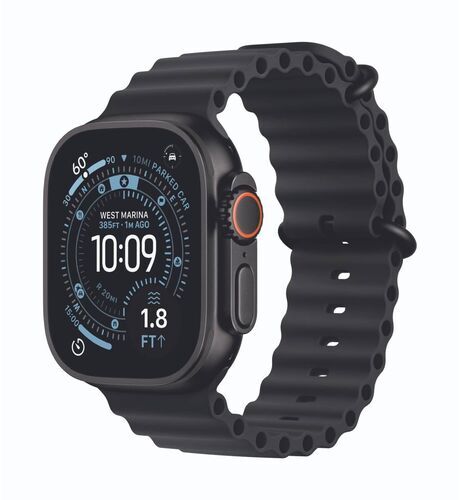
Apple Watch Ultra 4: Apple lists it from USD 799 in the US, with a 49 mm titanium case, up to 50 hours of normal use, and workout ratings of 18 hours in normal mode, 25 hours in Extended and 45 hours in Max Extended (reduced modes are not full-function modes). Satellite services depend on your region, and you need an iPhone. It is the pick when apps and phone integration matter more than expedition runtime. The generation before, the Apple Watch Ultra 3, is available refurbished, and our guide to which Apple Watch is right for you covers the range.
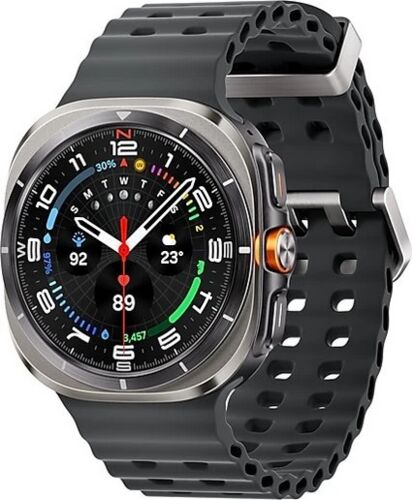
Samsung Galaxy Watch Ultra2: Samsung lists it from USD 699.99 in the US, with an 800 mAh battery, a 1.52-inch display, up to 20 hours of GPS workout and GPX route guidance. It needs a compatible Android phone. Samsung's product page does not establish satellite messaging on the watch: GPS reception is a different feature. The generation before, the Galaxy Watch Ultra (2025), is available refurbished.
Raw battery hours across brands are not a laboratory comparison. Garmin's Max Accuracy, Suunto's Performance and Apple's Max Extended are mode labels, not matched tests.
Which one for whom: for training history and on-watch route planning, the Fenix family, the Fenix 8 included. For an AMOLED outdoor watch at a lower hardware price, the Vertical 2. If apps and phone integration matter most, the Ultra 4 for an iPhone owner and the Galaxy Watch Ultra2 for an Android owner. For essential off-grid messaging, compare an inReach watch with dedicated satellite communicators and let coverage and operating conditions decide, not the word satellite.
Refurbished alternatives to the Garmin Fenix 9: specs compared
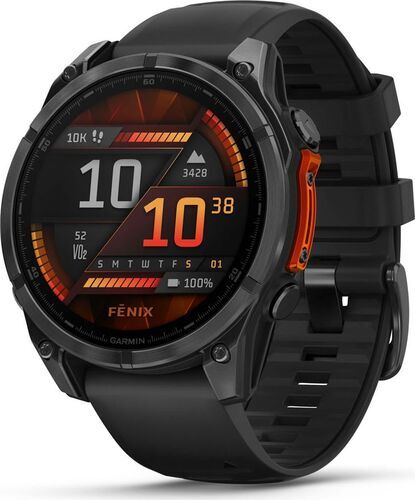
Display
OLED
Resolution
454 x 454
Case material
Stainless steel
Connectivity
WiFi, Bluetooth, NFC, ANT+
Release year
2024
Garmin Fenix 9 environmental data: what is published and what is not
We found no Fenix 9 life-cycle carbon figure, recycled-material share, packaging breakdown or fixed software-support end date in Garmin's material. Missing data is not proof of worse impact, but it means a numerical carbon ranking of these watches would not hold up. Garmin's corporate sustainability reports are background, not a figure for one watch.
Suunto's number: Suunto reports 9.68 kg CO₂e as the average for its outdoor watches, weighted by production volume and based on an assumed two-year life. The Vertical 2 is among the watches covered, but this is not a Vertical 2 figure. Suunto's separate offsets are not the physical removal of those emissions, and Suunto says its outdoor watches are made in China (Finnish design and testing is a separate point).
Apple's disclosures: for the Ultra 4, Apple reports 45% recycled content overall, 100% recycled titanium in the case, renewable electricity in manufacturing and fibre-based packaging. Brands disclose to different depths, and renewable electricity does not measure materials, transport or end of life.
Titanium is not a recycling score: Garmin describes a metal-and-plastic joining process for the Pro, and we found no study of how much material can be recovered.
Battery and service: Garmin says the rechargeable battery is not user-replaceable. Before you count on many years of use, find out how a worn battery gets serviced and what that costs, whether charging accessories and bands stay available, whether the software horizon is usable and whether you can export your activity history.
Longevity: a fixed manufacturing impact divided by more years of use gives a smaller yearly share. That is an accounting relationship, not proof that any switch is better for the environment: keeping or repairing a suitable watch can avoid producing another complete unit, and replacing one every year undermines that. The same logic favours a watch that already exists, such as a refurbished Fenix 8 or Fenix 8 Pro: its manufacturing impact is fixed, and each extra year of use divides it further. The logic is a way to weigh the choice, not a measured saving for any particular watch.
Garmin Fenix 9 operating environment: solar, temperature, signal and fit
Temperature: Garmin's manual gives minus 20 °C to 45 °C for air and storage, and 0 °C to 45 °C for charging, so let a watch return to that range before you charge it. How heat, cold, ageing and runtime interact depends on the workload, so a maximum runtime rating does not hold in every climate.
Solar light: the solar ratings assume strong outdoor light: 50,000 lux, and three hours a day for the daily figures. Shade, sleeves, indoor work, winter light and the way you wear the watch all shrink the gain, and a mostly indoor owner will see little of it. Solar is not new to the line either: the 51 mm Fenix 8 Solar is rated 48 days with qualifying sunlight.
The solar arithmetic: for the 51 mm Fenix 9 Pro Solar, the ratings imply 365 / 30 = 12.2 full discharge-and-recharge equivalents a year without solar, against 365 / 57 = 6.4 with the rated sunlight, if you use the watch the same way. That is arithmetic on Garmin's ratings, not a field measurement, an electricity figure or a forecast of battery life in years: partial charges are not full cycles, and the battery ages with time. A solar lens is useful for autonomy, but the evidence does not show that buying a new solar watch lowers total life-cycle emissions.
Light and display: AMOLED and transflective MIP screens read differently outdoors and at night, so try both in person before you choose.
Terrain and signal: a watch that receives navigation signals cannot necessarily send a message. Coverage, obstruction and alignment decide whether a watch with the right hardware can send one.
Fit and movement: the three sampled versions weigh 84 to 99 g with their silicone bands. Comfort can matter more than the case material for sleep tracking or a long run.
Garmin Fenix 9 FAQs
When was the Garmin Fenix 9 released?
Garmin announced the Fenix 9 and Fenix 9 Pro on 25 August 2026 and says they are available now. Order dates and regional rollout differ, so check your own country.
How much does the Garmin Fenix 9 cost?
In the US, Garmin lists the Fenix 9 from USD 999.99 and the Fenix 9 Pro from USD 1,099.99. Size, display and inReach change the quote, and prices in other countries differ.
What is the difference between the Fenix 9 and the Fenix 9 Pro?
The Pro has a titanium case where the base watch has a titanium bezel, a 1.5-inch AMOLED screen in the 51 mm case against 1.4 inches, and a separate solar version. In the sampled 51 mm watches the Pro is also heavier (99 g against 91 g) and thicker.
Do all Fenix 9 Pro watches have satellite and LTE?
No. Only the Pro inReach versions carry the hardware, and they need an active plan. Satellite and LTE are not new either: the Fenix 8 Pro introduced them in 2025.
How long does the Garmin Fenix 9 battery last?
Up to 29 days as a smartwatch on the base 51 mm, the same as the Fenix 8, and up to 31 days on the Pro AMOLED 51 mm. The Pro Solar 51 mm is rated 30 days, or 57 with qualifying sunlight. Activity ratings are shorter and depend on the mode.
Is the Garmin Fenix 9 better than the Fenix 8?
Not on every number. The base 51 mm AMOLED keeps the Fenix 8's 29-day rating, and the Pro's 31 days compares with 27 for the Fenix 8 Pro. No independent test compares the two.
Why choose a refurbished Garmin Fenix 8 over a new Fenix 9?
Because several headline points change little: the base watch's battery rating is the same as the Fenix 8's, and satellite and LTE are already on the Fenix 8 Pro. The Fenix 8 and Fenix 8 Pro are available refurbished now, refurbished by experts, with a minimum 12-month warranty and a 30-day free trial. Condition grades describe appearance only.
Get a refurbished Garmin Fenix 8 today
Garmin is a strong option for training history, on-watch route planning and long stretches between charges, and the Garmin Fenix 8 offers all three today, refurbished by experts, with a minimum 12-month warranty and a 30-day free trial. Want built-in satellite and LTE? See the Fenix 8 Pro, or browse refurbished smartwatches.

Sign up for our newsletter for the first time and save €15!
Never miss an offer again.
Information about the use of personal data can be found in our Privacy policy.
Get the refurbed app
For iOS and Android


Confirm sign-up
Almost done: We’ve sent you a confirmation email
- © Refurbed Marketplace GmbH
- Accessibility
- T&C
- Privacy Policy
- Imprint
- Legal Notices
- European Data Act
- Cookie Policy